
Changelog

Malformed or corrupted .xlsx files now return a descriptive error instead of a generic server exception.
Documents paused due to insufficient credits are automatically re-queued within minutes of a credit top-up, with no manual intervention required.
HTML, XHTML, MHTML, and EPUB files are no longer incorrectly blocked due to cost overestimation during processing.
Fixed a billing calculation error where media processing usage was being calculated incorrectly when determining how many credits should be reserved for their processing. Customers on prepaid plans will now see accurate preprocessing credit estimates for audio and video documents. This issue did not affect invoice charges.
.msg files are now correctly identified and processed. Previously, these files could fail to ingest due to incorrect format detection.
PDF validation is significantly faster, reducing upload latency for PDF documents.
paused_insufficient_credits is now a valid document status value in webhook payloads. Subscribers will receive this status when a document's processing is paused due to insufficient account credits.
Document processing on paid plans now uses a prepaid credit balance. When your balance isn't enough to cover an overage charge, credits are added automatically in $100 increments to fund it — unused credits always carry over. Any documents that can't be processed in the meantime are paused and resume automatically once credits are available. You'll receive an email notification each time a funding event occurs or if you hit your monthly limit. You can configure your funding increment and set a monthly spending cap in billing settings.
Connectors and document uploads now support specifying a workflow at creation time via the connector creation form, document upload form, or API. The "index" workflow is the default.
Agentic OCR is now available as a selectable ingest mode when creating connectors or uploading documents. It uses vision models for higher accuracy on low-quality scans and visually complex documents, and is the most accurate option for documents with forms, tables, or inconsistent layouts.
A new GET /documents/{document_id}/elements endpoint returns every structured element extracted from a document in reading order, including titles, tables, images, code blocks, and more. Each element includes its type, text, markdown, page location, and bounding box, with type-specific content where applicable. Results can be filtered by element type or index range.
Fixed a reliability issue where Excel files were sometimes misidentified during ingestion, causing them to fail silently. Excel files are now correctly recognized and processed.
Resource limits for a partition are now surfaced in a dedicated Limits tab on the partition details page, making it easier to review at a glance.
Introducing Ragie Parse (Early Access), a new Agentic OCR pipeline that uses vision AI to extract structured content with higher fidelity than traditional OCR, supporting 25+ element types including tables, forms, signatures, key-value pairs, barcodes, and stamps.
The web crawler connector can now be created and managed programmatically through the public API without going through the dashboard (Enterprise only).
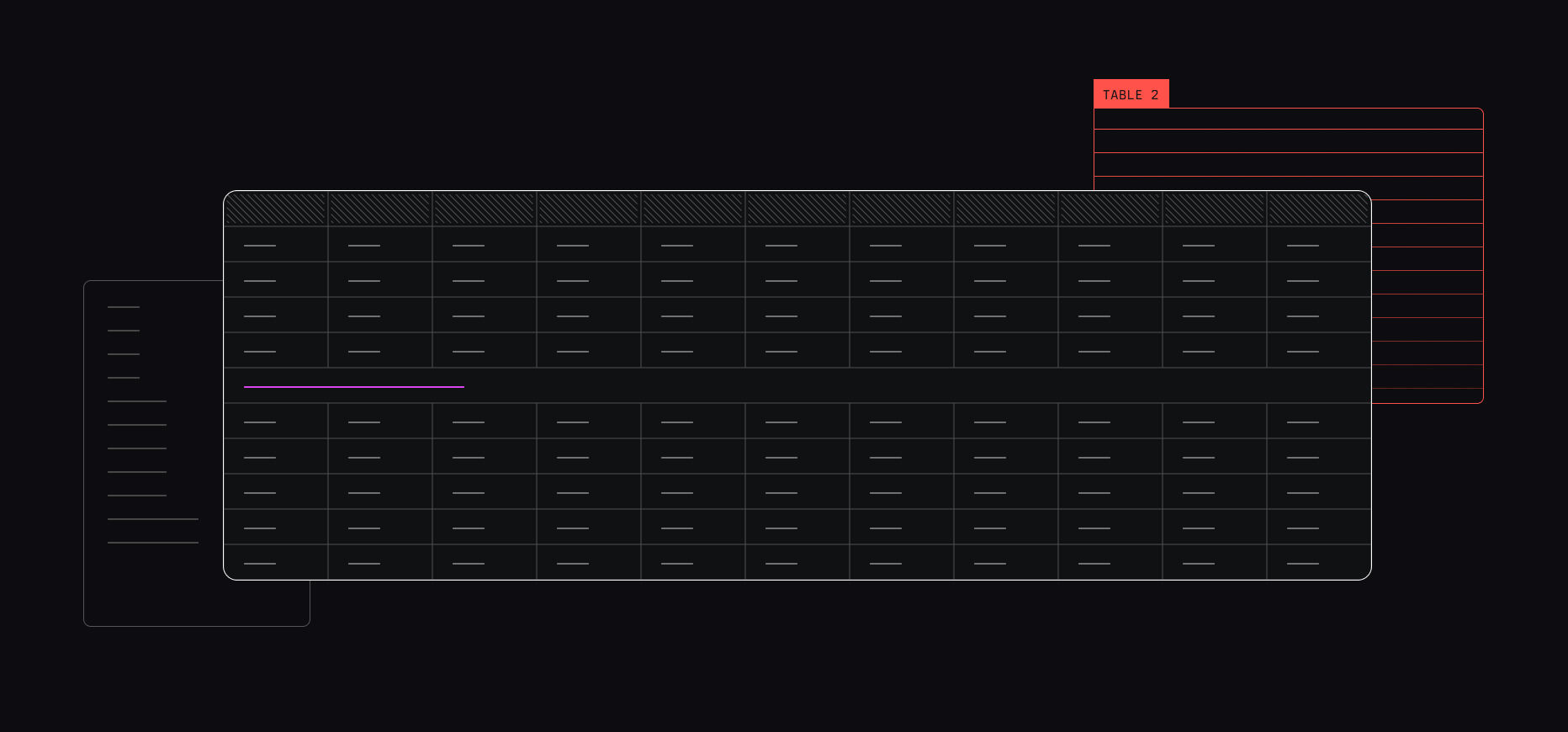
Spreadsheets now include embedded images and charts alongside table data, with automatic separation of table and freeform regions for cleaner, more complete extraction.
A new endpoint (GET /webhook_endpoints) to retrieve a list of all your configured webhook endpoints.

Ragie MCP Bridge (early access), a permissioned bridge that brings RBAC, SSO, SCIM provisioning, and model-agnostic retrieval to internal employees.
Open-source ragie-mcp-server (v1.0) delivering a full MCP toolset backed by Ragie retrieval.
ragie-cli binaries for macOS, Linux, and Windows that bulk-ingest local files, archives, YouTube content, WordPress docs, and more.
Promptie, a playground for iterating on prompts, retrieval settings, and source inspection.
Early access to Audio & Video RAG with multilingual transcription, on-screen analysis, and support for media formats such as MP3, WAV, MP4, and AVI.
SharePoint and Backblaze connectors plus Google Drive file-level uploads so enterprises can ingest exactly the assets they need.
Sync Connections API so engineers can programmatically trigger connector refreshes without visiting the UI.
Connector page-limit controls to stop runaway ingestion and manage spend per tenant or integration.
Document Chunks API, exposing the exact context Ragie generated and enabling "chunk fill" optimizations.
Additional webhook statuses announcing when documents reach the indexed state, enabling latency-sensitive applications.